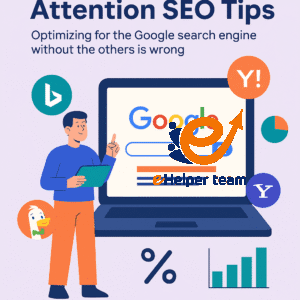
Attention SEO Tips | Optimizing the website of the Google search engine without the others is wrong
However, here’s the trap: many brands make the mistake of optimizing only for Google, forgetting that it’s not the sole player in the game. For instance, strategies like ranking YouTube videos on Google search show that expanding optimization efforts beyond traditional website SEO can dramatically increase visibility.
This overreliance creates SEO vulnerabilities. What happens if Google updates its algorithm, penalizes your site, or reduces your traffic overnight? Businesses that depend entirely on one channel risk losing visibility, revenue, and brand stability. Instead, a balanced SEO approach that includes multiple search engines is the smarter path.
In this article, we’ll break down the importance of looking beyond Google, the risks of single-platform SEO, and actionable tips to future-proof your digital strategy.

Essential SEO Tips for a Balanced Strategy
Before diving into Google’s dominance, it’s crucial to highlight practical SEO steps that businesses should apply across all platforms:
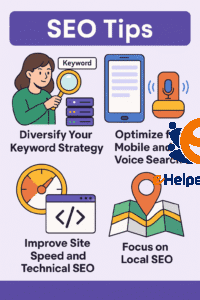
Diversify Your Keyword Strategy
Don’t just focus on keywords that perform well on Google. Research what’s trending on Bing, Yahoo, and DuckDuckGo. Tailor content to capture audiences across different engines.Optimize for Mobile and Voice Search
With the rise of mobile-first indexing and voice assistants like Alexa and Siri (powered by Bing), make sure your content is mobile-friendly and uses conversational keywords for voice queries.Improve Site Speed and Technical SEO
Fast-loading websites perform better across all search engines. Use tools like PageSpeed Insights and Bing Webmaster Tools to fix performance issues.Focus on Local SEO
Search engines outside of Google often give more weight to local results. Make sure your business is listed correctly on Bing Places for Business, Yahoo Local, and other directories.Embrace Privacy-Focused Optimization
DuckDuckGo is growing in popularity among privacy-conscious users. Ensure your site has clear privacy policies and avoids intrusive ads.Build Quality Backlinks from Diverse Sources
A natural, varied backlink profile not only helps on Google but also on alternative search engines that rely heavily on trust signals.
By following these tips, businesses lay the foundation for long-term SEO resilience, regardless of where their audience is searching.
Understanding the Role of Google Search Engine in SEO
The Google search engine dominates the global market, holding around 90% of worldwide search traffic. Because of its influence, many SEO professionals design strategies exclusively tailored to Google’s ranking factors, such as:
Page Experience Signals: Core Web Vitals, mobile-friendliness, and site speed.
E-E-A-T: Experience, Expertise, Authority, and Trustworthiness.
Content Quality: Relevance, freshness, and user engagement.
While these practices are vital, they’re not universal rules across all search engines. For example:
Bing emphasizes social signals and integration with Microsoft services.
Yahoo relies heavily on partnership-driven results.
DuckDuckGo promotes privacy-first search results, not ad-driven visibility.
If you optimize only for Google, you may miss audience segments who use these platforms, especially in industries like finance, healthcare, and tech, where privacy and alternative search engines play a huge role.
Risks of Ignoring Other Search Engines in Digital Strategy
Depending solely on the Google search engine comes with real dangers:
Algorithm Dependency
Google’s frequent updates (like Panda, Penguin, and Helpful Content Update) can devastate rankings overnight. Ecommere website design mistakes are a great example of how overlooked factors can also harm performance, showing why diversifying reduces that risk.
Audience Blind Spots
Millions of users rely on Bing (default in Microsoft Edge) or Yahoo. Ignoring them means losing market share.Privacy-First Users
Platforms like DuckDuckGo attract users who distrust Google’s data practices. Without optimizing for them, you alienate a privacy-conscious demographic.Geographic Limitations
In regions like China (Baidu) and Russia (Yandex), Google is not the primary engine. Businesses targeting global audiences must adapt accordingly.
By ignoring these platforms, brands limit their organic reach and potential growth opportunities.
Benefits of Diversifying SEO Beyond Google
Spreading SEO efforts beyond the Google search engine offers tangible benefits:
Wider Reach: Capturing traffic from Bing, Yahoo, and DuckDuckGo ensures no single point of failure.
Reduced Risk: Algorithm updates from one search engine won’t collapse your entire strategy.
Cost-Effective Ads: PPC campaigns on Bing Ads often cost less than Google Ads, with a higher ROI in certain demographics.
Voice Search Optimization: Bing powers Cortana, Alexa, and Siri, meaning your visibility extends into voice-driven queries.
Brand Authority: A presence across multiple engines signals strength and adaptability.
This approach creates a resilient online presence less vulnerable to fluctuations in one ecosystem.
Practical Tips to Optimize for Bing, Yahoo, and Alternative Search Engines
Here’s how to go beyond the Google search engine and maximize your SEO reach:
Bing Optimization
Submit your site to Bing Webmaster Tools.
Focus on schema markup for rich results.
Build strong backlinks from trusted domains.
Yahoo SEO
Ensure local business listings are accurate.
Prioritize high-quality content partnerships.
DuckDuckGo Strategies
Improve site privacy policies.
Use keyword-rich metadata, as DuckDuckGo favors clear context.
International Engines
For Baidu, focus on simplified Chinese content.
For Yandex, prioritize local hosting and backlinks.
By applying these targeted strategies, you can expand visibility beyond the mainstream.
Balancing SEO Efforts Across Platforms for Long-Term Growth
A winning SEO strategy requires balance. Instead of pouring all resources into the Google search engine, brands should adopt a 70/30 model:
70% focus on Google (since it drives the majority of traffic).
30% dedicated to alternative engines like Bing, Yahoo, DuckDuckGo, and region-specific platforms.
This balance ensures that even if Google’s algorithm changes, you maintain a safety net of traffic and leads. It’s not about ignoring Google but about protecting business continuity through diversification.
Case Studies: Brands That Succeeded Beyond Google
LinkedIn: Leveraged Bing for professional search queries, increasing visibility among corporate users.
Nokia: Boosted presence in European markets by targeting Yahoo and Yandex.
Small E-commerce Stores: Found cheaper ad alternatives on Bing Ads, resulting in higher ROI compared to Google Ads.
These examples highlight that success doesn’t have to be Google-centric.
Future of Search: AI, Voice Search, and Multiplatform Optimization
The future of SEO isn’t tied to the Google search engine alone. With the rise of AI-driven platforms, voice assistants, and multimodal search, optimization strategies must evolve.
AI Assistants: ChatGPT, Bing AI, and Gemini are shaping new ways users discover content.
Voice Search: Nearly 50% of searches are voice-based, often powered by Bing and Alexa.
Visual Search: Platforms like Pinterest and TikTok are emerging as search alternatives for product discovery.
This shift means brands must prepare for search diversification, ensuring visibility wherever users are searching.
FAQs: SEO Strategies Beyond Google Search Engine
Q1: Why is it risky to focus only on the Google search engine?
Because it creates dependence on one platform, exposing your site to ranking losses from algorithm changes.
Q2: Which search engines should I optimize for besides Google?
Bing, Yahoo, DuckDuckGo, Baidu, and Yandex, depending on your target audience.
Q3: Is SEO for Bing and Yahoo different from Google?
Yes, while there are overlaps, Bing values social signals and Yahoo relies on partnership-driven results.
Q4: Does advertising cost less on Bing than Google?
Often yes — Bing Ads can provide lower CPC rates, especially in certain industries.
Q5: How does voice search affect SEO?
Voice search relies heavily on Bing and Alexa integrations, meaning optimizing beyond Google improves visibility.
Q6: What’s the best SEO strategy for the future?
A diversified approach that includes Google, alternative engines, and AI-powered platforms.
User Behavior Differences Across Search Engines
Different search engines attract different types of users. Understanding these behavioral patterns can help brands target the right demographics more effectively:
Bing Users: Often slightly older, with higher household incomes. Bing’s integration with Microsoft Office and Windows devices makes it popular among professionals.
Yahoo Users: Yahoo still retains a loyal audience, particularly in news, finance, and email services. This audience tends to engage more with long-form content and news-related articles.
DuckDuckGo Users: Highly privacy-conscious individuals who prefer minimal tracking and clean search results. They value transparency and lightweight websites without intrusive ads.
By aligning content strategies with these behaviors, businesses can improve relevance and engagement across platforms.
SEO Metrics to Track Beyond Google
Measuring SEO success outside of the Google search engine requires different tools and metrics. Some of the most valuable include:
Bing Webmaster Tools: Offers insights into search performance, backlinks, crawl issues, and keyword rankings specific to Bing.
Click-Through Rate (CTR) and Impressions: Comparing CTR across Google, Bing, and Yahoo helps identify which engine delivers higher engagement.
Organic Conversions: Track leads or sales originating from non-Google sources to assess ROI.
Focusing on cross-platform analytics ensures businesses make data-driven SEO decisions.
Content Formats That Work Best on Alternative Search Engines
Not all content types perform equally across platforms:
Bing: Strongly favors rich snippets, multimedia content, and high-quality images.
Yahoo: Leans toward in-depth, long-form content supported by authoritative sources.
DuckDuckGo: Prioritizes fast-loading, text-focused pages with clear metadata.
Experimenting with different content formats can expand visibility beyond Google.
Advertising Insights Beyond Google Ads
While Google Ads dominates the PPC market, other platforms offer powerful, often cheaper alternatives:
Bing Ads: Typically lower CPC (Cost Per Click) and higher ROI in industries like finance and technology.
Yahoo Native Ads: Effective for content-driven campaigns, particularly in news and lifestyle niches.
DuckDuckGo Ads: Operates via Microsoft Advertising, offering access to a privacy-first audience.
Diversifying ad spend across platforms allows brands to maximize reach at a reduced cost.
Voice & Visual Search Best Practices
The future of SEO is heavily influenced by voice and visual search technologies:
Voice Search: Optimize for conversational keywords and FAQs, as users tend to search with complete questions. Example: “What’s the best smartphone under $500?”
Visual Search: Platforms like Pinterest Lens, Google Lens, and Bing Visual Search are gaining traction. Optimizing product images with alt text and schema helps brands appear in visual search results.
Adapting to these trends ensures brands stay ahead of changing user behaviors.
The Role of AI in Multiplatform SEO
AI is reshaping how search engines deliver results:
Bing AI: Integration with ChatGPT enhances contextual, conversational search experiences.
Google Gemini & SGE (Search Generative Experience): Shifts focus toward AI-generated summaries within search results.
AI-Powered Personalization: Search engines are increasingly tailoring results based on user intent, location, and browsing history.
Conclusion
The Google search engine will always be a central force in SEO, but optimizing solely for it is shortsighted. Businesses must diversify their strategies, targeting alternative search engines, voice search platforms, and AI-driven tools. By doing so, they create sustainable visibility, protect against risks, and tap into new audiences.
A resilient SEO strategy is not about chasing one algorithm but about being present wherever your customers are searching.